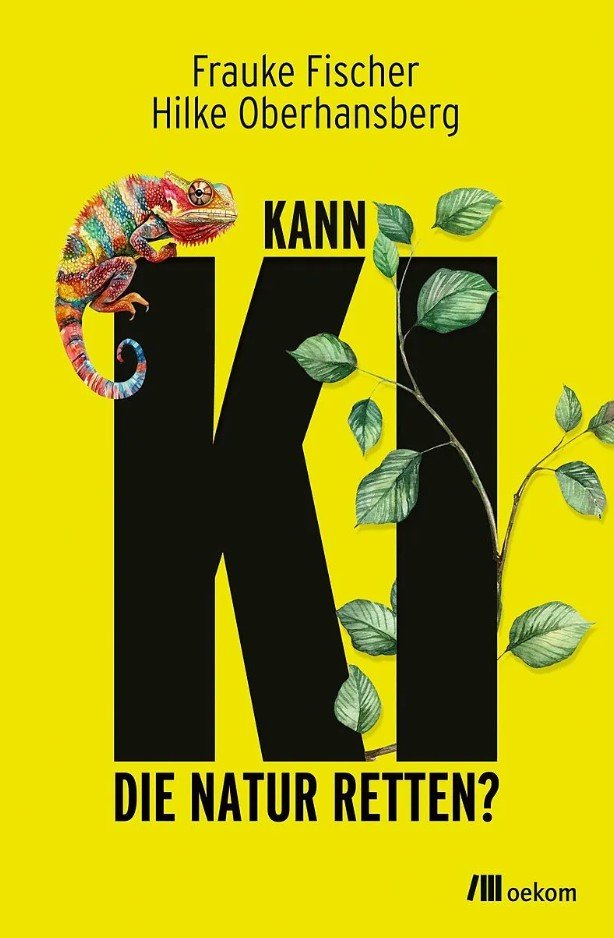
TIR Library Newsletter: Our Book Recommendation
In its second Library Newsletter of 2026, the Foundation for Animals in the Law (TIR) once again highlights selected new additions to its collection. The newsletter features books, articles, and film clips on animal-related topics. The current issue focuses on the book “Can AI Save Nature?” It examines whether artificial intelligence accelerates ecological crises—or whether it can, in fact, be used to address them.
June 7, 2026
This book examines whether AI can help curb environmental destruction and the loss of biodiversity. The authors—a biologist and an economist—use concrete examples to show where AI is already being successfully employed in nature conservation and where it could help render the protection of species and habitats more efficient in the future. At the same time, the book provides in-depth knowledge about biology and biodiversity—from evolution to the current sixth mass extinction (the ongoing, predominantly human-caused loss of biological diversity).
AI-powered audio and image recognition systems enable the rapid and precise analysis of data from wildlife cameras. These analyses reveal where endangered species are found, thereby helping to identify important protected areas. In addition, AI can predict potential conflicts between animals and human activities—such as shipping and whale sharks—at an early stage.
Further advancements in monitoring and early-warning systems, such as TrailGuard AI, can also help better protect endangered species from poaching.
Furthermore, the book describes the risks and shortcomings of AI. After all, AI models are only as good as the data used to train them, and this data reflects human errors, gaps in knowledge, and human interference with nature. Ecosystems are so complex that we cannot reconstruct either genetic diversity or species richness. Therefore, nature conservation cannot succeed through technology alone; rather, the corresponding political and societal will is crucial. Additionally, there is a risk that sensitive data could be misused: instead of protecting endangered animals, AI systems could unintentionally reveal their whereabouts. For this reason, a careful risk assessment is always necessary before their deployment.
One important aspect is the raw materials required to manufacture AI products. These include, in particular, the so-called rare earth elements—a group of 17 metals that are indispensable for many high-tech products.
This process often places a strain on valuable ecosystems such as rainforests or the deep sea and, in some cases, causes irreversible damage to the environment. At the same time, the demand for raw materials and energy from AI systems continues to rise.
The idea that AI alone can save nature therefore seems contradictory: on the one hand, it can support nature conservation and species protection; on the other hand, the development itself contributes to resource consumption and biodiversity loss. This makes the circular economy and recycling all the more important.
The book makes it clear: AI is not a panacea, but a tool whose benefits depend on its responsible use. Whether we will succeed in turning the tide and slowing the ongoing loss of biodiversity with the help of this technology remains to be seen.
“Can AI Save Nature?” by Frauke Fischer and Hilke Oberhansberg is available in stores or can be viewed at the TIR Library during opening hours by appointment, where reading and study areas are available. The latest additions to the TIR Library are featured in the TIR Library Newsletter.
Further information (in German)
- Book: Biodiversität. 100 Seiten by Jasmin Schreiber
- Book: Biodiversität zwischen Wasser und Land: Exkursionen zu Gewässern, Mooren und Auen der Schweiz by Florian Altermatt, Sabine Güsewell, Rolf Holderegger
- Book: Biodiversität, Ökosystemfunktionen und Naturschutz by Werner Härdtle
- Book: Die Wege der Tiere: Ihre Wanderungen an Land, zu Wasser und in der Luft - in 50 Karten by James Cheshire, Oliver Uberti
- Article: Ökologische und soziale Probleme des überhöhten Fleischkonsums. Überblick und Ansätze für Wege aus der Krise by Susanne Stoll-Kleemann
- Article: Tierethik im Spannungsfeld von Tierwohl, Landwirtschaft und Agrarpolitik by Markus Vogt
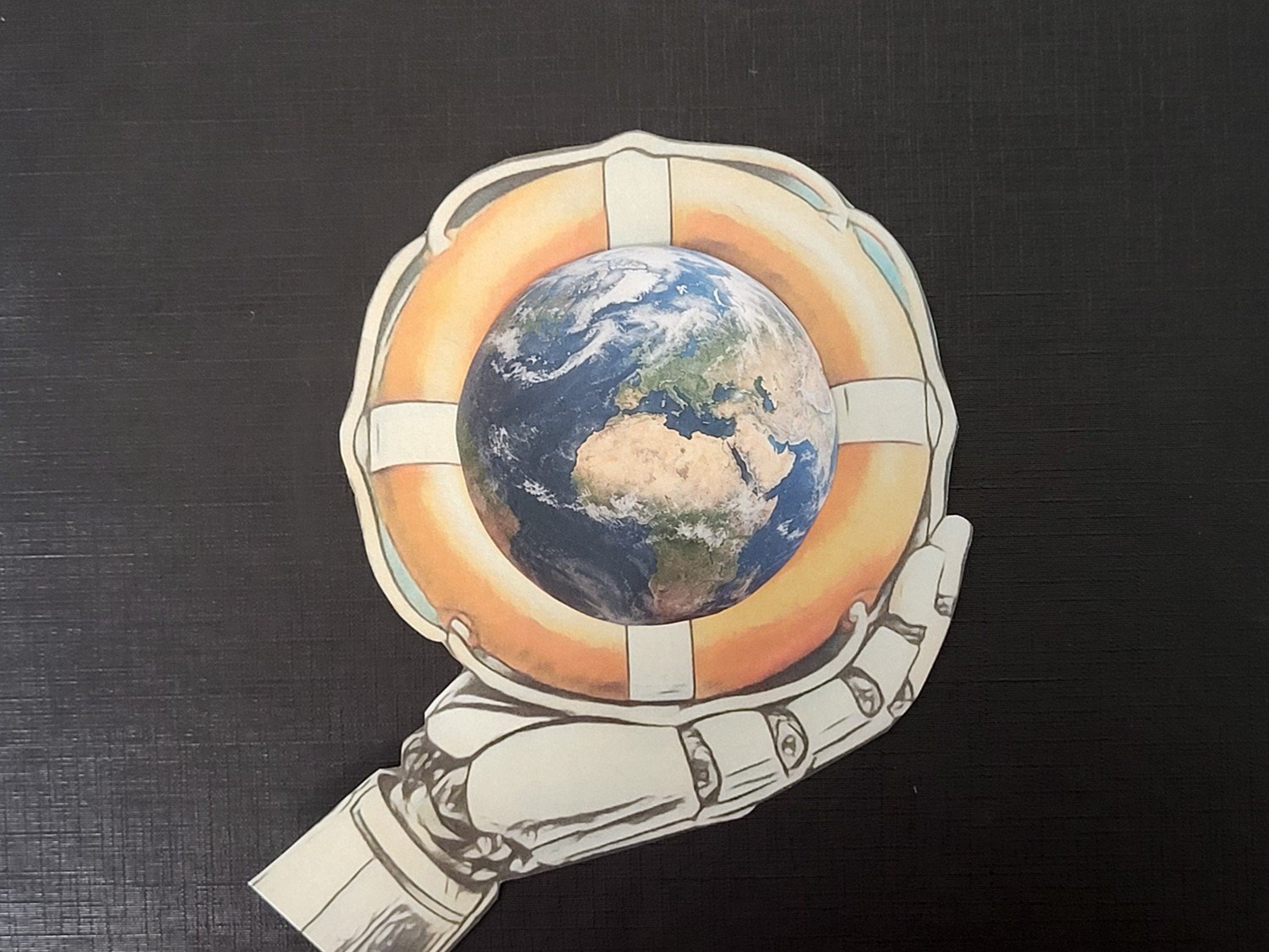
A lifeline for the Earth
© Moena Zeller
Book "Kann KI die Natur retten? (Can AI Save Nature?)"